
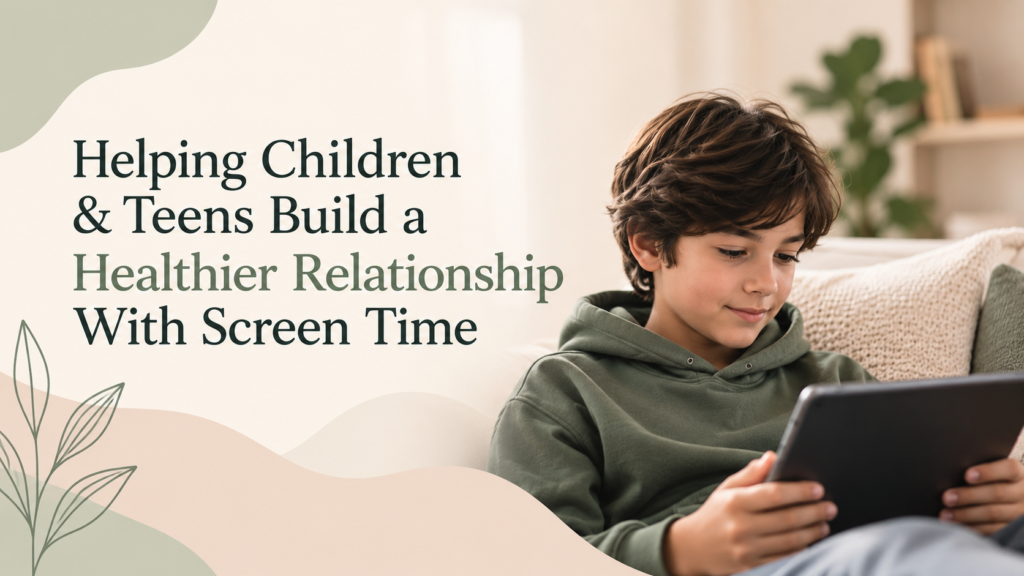
Screens are now a normal part of childhood and teenage life. Children use phones, tablets, computers and gaming devices for school, entertainment, communication and social connection.
Because screens are part of everyday life, the goal does not always need to be removing them completely. Instead, families can work toward creating a healthier and more balanced relationship with technology.
Why Screen Time Can Become a Challenge
Screen use can sometimes begin to interfere with other important parts of a child’s life.
Parents may notice:
- Difficulty stopping a game or video
- Arguments when screen time ends
- Less interest in other activities
- Changes in sleep routines
- Difficulty focusing on schoolwork
- Spending less time with family or friends
- Using screens to cope with difficult emotions
- Becoming upset when access to a device is limited
Every child is different, and screen use needs to be understood in the context of the child’s age, personality, routines and overall wellbeing.
Start With Understanding, Not Punishment
When screen time becomes a source of conflict, it can be tempting to immediately take the device away.
Before setting new rules, try having a calm conversation.
Ask your child:
“What do you enjoy about using your phone or playing this game?”
“What makes it difficult to stop?”
“How do you feel when you are online?”
These conversations can help parents understand whether the screen is being used for entertainment, connection, relaxation, avoidance or another reason.
The goal is to create an environment where children feel comfortable talking about their experiences.
Create Clear and Consistent Boundaries
Children and teenagers often benefit from knowing what to expect.
Families can establish simple expectations around:
- When devices can be used
- When screens need to be put away
- Screen-free family time
- Homework and responsibilities
- Bedtime routines
- Appropriate online behaviour
- Which apps, games or websites are appropriate
Try to keep expectations consistent while allowing room for age and individual needs.
Make Space for Other Activities
A healthy relationship with technology also means making room for life away from screens.
Encourage opportunities for:
Movement and outdoor activities
Walking, sports and other physical activities can provide a natural break from devices.
Family time
Meals, conversations and shared activities can create opportunities for connection.
Creative activities
Art, music, reading, building or other hobbies can give children different ways to explore their interests.
Friendships and social connection
Helping children maintain meaningful relationships outside of online spaces can support their overall wellbeing.
Protect Sleep and Downtime
Screens can easily become part of a child’s bedtime routine.
Creating a consistent wind-down period can help separate screen time from sleep time.
Consider keeping devices away from the bed and creating a predictable bedtime routine that allows children to transition away from stimulating activities.
Be a Role Model
Children often learn from what they see around them.
If adults are regularly checking phones during meals, conversations or family activities, children may find it harder to understand why different expectations apply to them.
Consider creating some screen-free moments for the whole family.
This makes healthy technology habits something everyone participates in rather than a rule directed only at children.
Avoid Making Every Conversation About Screen Time
If every interaction becomes a discussion about phones, games or social media, tension can build quickly.
Continue talking about your child’s interests, friendships, school, feelings and everyday experiences.
Technology is only one part of their life.
Maintaining connection and trust can make it easier to have difficult conversations when they are needed.
When Additional Support May Help
Sometimes screen use may be connected to broader emotional, behavioural or family challenges.
If you are concerned about your child’s wellbeing or are finding it difficult to manage ongoing conflict around technology, talking with a counsellor can provide another source of support.
A child-centred and supportive approach can help explore what may be happening underneath the behaviour while giving families space to work toward practical changes.
Supporting a Healthier Balance
Creating healthier screen habits does not have to happen overnight.
Start with small changes. Listen to your child. Set realistic boundaries. Make time for connection and activities away from screens.
Most importantly, approach the conversation with curiosity and compassion.
The goal isn’t simply less screen time. It’s helping children and teens develop a healthier, more balanced relationship with technology.
Counselling With MI
At Counselling With MI, Maliha Iqbal, BSW & RSW, provides confidential, client-centred and trauma-informed counselling for children age 8+, adults, seniors, couples and families.
If you would like support understanding your child’s emotional or behavioural challenges, counselling can provide a safe and supportive space to begin.